All About Guitar Pickup “Hum” or Noise – part 3

Any final thoughts on what I can do about noise from my guitar pickups?

This is part 3 of our 3-part series on guitar pickup noise. This section describes a few gear modifications that you can consider, and also talks about a few electronic devices that some players have had success with.

I love the sound of my single coil pickups, but the noise really bothers me – is there anything else I can do?

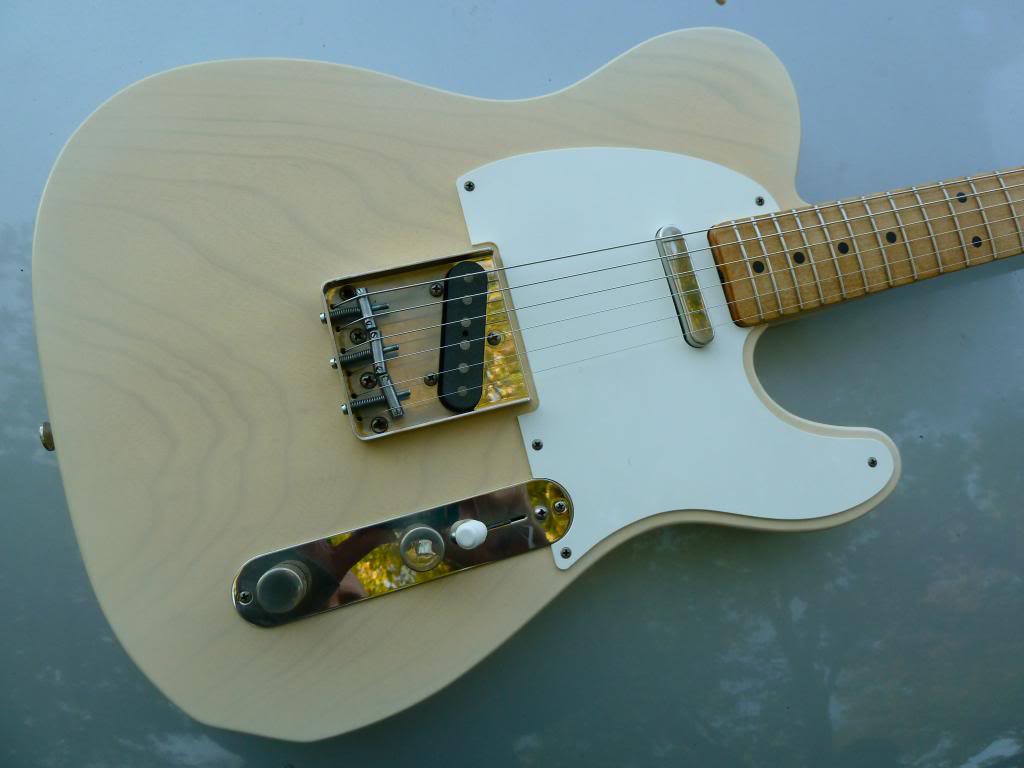
After all is said and done, a Fender style guitar can have close to 5 feet of non-shielded, cloth covered wire.

After all is said and done, a Fender style guitar can have close to 5 feet of non-shielded, cloth covered wire.

There are also a few direct modifications to your gear that are possibilities to consider. One thing you can try is to replace all of the unshielded wire inside the guitar with shielded cable. Any length of unshielded wire much longer than an inch can sense the 120 cycle frequency. Fender guitars are typically loaded with about 5 feet of single conductor non-shielded lead wire. However, you have to think about this strategy before you do it. This is because replacing the lead wire with shielded cable can lead to a slight amount of high frequency loss. Your guitar may sound slightly darker after making this swap, which is the drawback of this modification. Another thing to consider is a shielding paint. Some builders we work with paint all of the control & pickup cavities with a conductive shielding paint. It is easy to get hold of at Stewart MacDonald’s guitar supply. You paint all of the cavities and also the back of the pickguard. After this is done, and dried of course, you have to attach a ground wire to it. With this approach you can also loose a little high end. The other draw back of shielding the cavities is that it’s easy to short out your signal if a lug on a pot or switch touches the shielding paint.

I have heard that there are some other devices out there that can help with reducing noise, is that true?

There are in fact some electronic ways of dealing with guitar pickup hum. For example, a noise gate is a device that will sense the difference between when you are playing and when you’re not playing. It will cut off the signal from your guitar when you’re not playing. You set the minimal volume level, and then it automatically cuts off the signal to the amp when the volume goes below this (when you’re not playing). Unfortunately, this can sometimes sound unnatural, and it can also limit your dynamic range. There is also a device called a hum de-bugger. The manufacturer indicates that it is not a noise gate – they call it a hum extractor. I haven’t used one myself, so I can’t comment on its effectiveness. What I can say is that when you are working with certain gear combinations, or if you are headed for a venue that you’re unfamiliar with, then having several noise suppression devices to work with can only be a good thing.

What do professional musicians have to say about single coil noise?

I have talked to many professional players who tour and record with single coil pickups. Many of them claim that hum is not an issue. Obviously they have learned to deal with it by paying attention to their surroundings and finding a good place and direction to stand. Most often there is a “sweet spot” where noise is dramatically reduced just by pointing your guitar in a different direction. For even more detail on this, please see parts #1 and #2 of this 3-part series.

All About Guitar Pickup “Hum” or Noise – part 2

How can I manage the noise my guitar is making?

This is part 2 of our 3-part series on guitar pickup noise. This section describes some of the ways to solve or at least manage the noise you may be hearing from your guitar.

Everything checks out – so how can I deal with the noise I’m still  hearing?

The easiest way to stop or at least minimize the 60 cycle hum is by using RWRP pickup sets and then putting your pickup selector in a middle position so that it runs 2 of your single coils together at the same time. By doing this much of the 60 cycle hum will at least be reduced.


Before I switch to the middle position, is there anything else I can do to reduce the guitar pickup hum I’m hearing?

Here is a good checklist of some of the major things you can address:

1-Dimmer switches and ceiling fans. If you have one of these on the same circuit you have your amp plugged into you will get a lot of 60 cycle hum. In fact, you can get so much that it will overpower your amp. Plug into another circuit!

2-Proximity to a neon sign. These can cause a lot of noise. Turn it off if possible. If you are playing in a venue where they want to leave it on, see if it can be moved – at least for a few hours.

3-Amp ground switch positioning. If you are using a vintage amp, and a Fender in particular, make sure that you have the ground switch in the correct position.

Make sure to check the ground switch on you amp.  Your amp can be a source of noise if not properly grounded.

Make sure to check the ground switch on you amp. Your amp can be a source of noise if not properly grounded.

4- Proper outlet wiring. Believe it or not, I have found many miss-wired sockets in many different clubs. So checking your wall outlet can sometimes solve the problem – especially if you have ruled out all of the other more obvious causes. You can get a simple circuit tester at most hardware stores. When you plug it into the wall there are a series of lights that will tell you if the outlet is wired properly. These testers are only a few dollars and they will show you if the outlet is reverse wired. They will also show you if the ground in the outlet is connected or not.

5-When you are not playing, keep your hands on the strings. You can also roll the volume off all the way.


So there is no “one size fits all” answer, is there?

Generally speaking, minimizing noise with single coils is a matter of looking around and seeing what is causing the interference. If all else fails throw that selector switch into the middle position on a 2 pickup guitar, or in either the 2 or 4 position on a 3 pickup guitar. That is what an RWRP pickup is made for – that middle position is the hum-canceling position. I agree it’s not the ideal solution, but it does give you an alternative to bailing out on a bad situation.

All About Guitar Pickup “Hum” or Noise – part 1

Is the noise from my new Lollar pickups “normal?”

We will be publishing a  three part series on guitar pickup noise. In this series you will be able to read the main questions we get on this subject. Each of the questions will be followed by a thorough answer or discussion.


I just got my new pickups installed and I seem to notice more noise than I’m used to. Is there a problem?

It is interesting to note that one of the most common “causes” and “solutions” to hearing noise from your new pickups is recognizing the fact that they are brand new. In other words, we find that just after a new set of pickups is installed, our customers are listening to their guitars much more intensely than usual. You are listening to the new pickups for the first few times, in much greater detail, and you are paying more attention to them. We typically recommend that you do a side by side comparison of your new set and a set you are “used” to. The best way to do this is simply get out another guitar that you’re familiar with and switch back and forth. After doing this a few times, most players realize that the new set is actually similar, if not better, when compared against a familiar guitar.


I hear a little noise from single coils AND humbuckers, what’s the difference?

Lollar Imperial Humbuckers will cancel 60 cycle hum

Lollar Imperial Humbuckers will cancel 60 cycle hum

Single coils are sensitive to both 60 and 120 cycle noise. Of course humbuckers cancel the very loud, low frequency noise of the 60 cycle frequency. But all pickups will sense the 120 cycle frequency. Fortunately it can be displaced by shielding and having your strings grounded. For example, when you touch the strings most of the 120 cycle goes away. The most distracting is the 60 cycle hum, because the only thing that will quiet it is actually moving the position of the guitar relative to your position on the stage or in the room. In other words, the solution to this is simply standing in a different place.


If I hear a little noise from my new pickups, is there something wrong with the pickup?

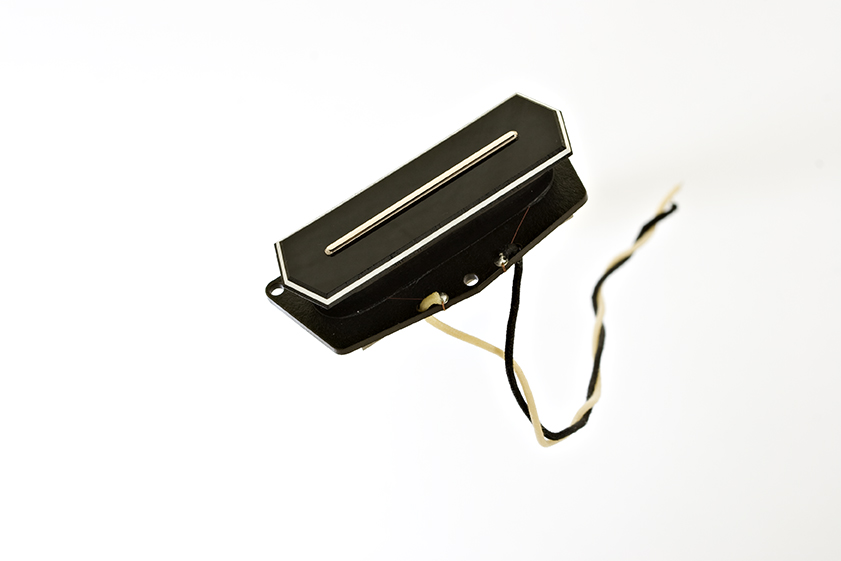
Lollar P90s have a large coil, which can cause noise

Lollar P90s have a large coil, which can cause noise

The noise is not the pickup itself – it is caused by external electro magnetically generated fields. The pickup is basically acting like an antenna and “receiving” the signals generated by this electrical field. Also, the size of the coil can have an effect on how much noise is generated – a bigger antenna has a better ability to receive these signals. So that means a P-90 or Charlie Christian with a large wide coil will be noisier than a narrower, taller Fender type coil.

Lollar Installation and Technical Videos Available

Some of you have already made use of the various video clips about installing Lollar pickups. But we are posting this blog to make sure we let everyone know about this great resource.

Currently there are 6 videos available on YouTube. You can link to 5 of them directly on our web site. They include a 5-part series on Lollar Mini Humbucker installation, a 3-part series on installing Lollar Strat pickups; a 7-part series on Lollar P-90 pickup installation; a 2-part series on Lollar Charlie Christian pickup installation (for Tele); and a single video that takes you through a Lollar Melody Maker pickup & pickguard installation. There is also a newer video that has not yet been linked directly to our web site. That video is a good instructional video on proper pickup height adjustment of Lollar pickups. That video is currently accessible directly through YouTube.

Lollar McCarty style pickup is perfect for the Godin 5th Avenue

Lollar McCarty style pickup is perfect for the Godin 5th Avenue acoustic archtop

Also, over the next few weeks we will be posting two new video segments. One of them will show Jason installing a Lollar McCarty style pickup / pickguard assembly onto a Godin 5th Avenue acoustic archtop guitar. The second new video will feature steel guitar player extraordinaire, Orville Johnson, demonstrating and comparing the Lollar Chicago Steel pickup and the Lollar Supro style pickup.

Selecting the Correct Lollar P-90 Dogear Pickups

Selecting the Correct Lollar P-90 Dogear Pickups:

The P90 Dog Ear is one of the most problematic pickups to determine which a guitar needs. They also can be difficult to install and adjust.

Some guitars have the strings higher off the body than others, if the neck joint is like a traditional archtop with a fingerboard extension, the guitar will often take a tall Dog Ear (my stock item).

If the guitar has a neck joint like a Gibson ES 335, the fingerboard is at the same level as the top of the guitar so it needs a short Dog Ear.

I make a short version—I don’t think anyone else does other than Korea. The short Dog Ear cover is .2” tall with pole spacing of 1 7/8”. The tall pickup cover is .452” tall with pole spacing of- 1 31/32”.

ES 5, ES 295’s and early ES 175’s use tall Dog Ears. ES 330’s use a short neck and a tall bridge.

Older ES 125’s needs a pickup that is neither short nor tall and needs to be custom made. I do not supply pickup covers for these; you have to re-use the old cover.

I make plastic shims in crème or black that are exactly the shape of the bottom of the dog ear cover. The crème shim is only available in .1” thick. The black is available in .0325,” .0625,” .1,” .125,” and .25” thickness. You can stack the shims if they need to be thicker.  Sometimes you have to make a riser block out of wood like on the old 295 bridge pickup. There is also a shim that is “oversized” for use when you are installing a dogear style pickup into a guitar that has been routed for a humbucker sized pickup. It spans the extra width of the humbucker route, and adds an extra distance of 3/32” all the way around. It’s cut out of 1/32” thick material.