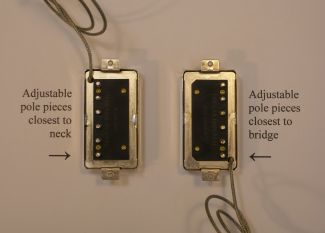
Two questions we are frequently asked are: Do vintage guitar pickups have a “lifespan?” and Can the sound quality of vintage guitar pickups change or degrade over time?
In most cases the tone does not appreciably degrade if the coil is still intact. However there are two main factors that can affect your guitar pickup over time. A change in either of these can cause a loss or change in the tone of your guitar pickup. We will discuss these factors one at a time.
First, let’s talk about how guitar pickup magnets can be affected over time.
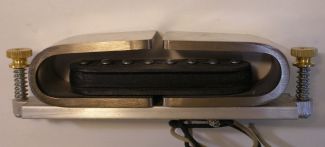
Some pickup designs used magnets that were not made of a permanent magnetic alloy. A prime example is the Rickenbacker horseshoe pickup. These magnets—which are the “horseshoes” themselves—often go dead, or almost dead. Once they lose their magnetic charge to a sufficient degree, the result will be a loss of output and frequency response.
The second point about guitar pickup magnets involves AlNiCo based magnet materials. It is important to note that AlNiCo magnets can be easily degaussed, and the way many pickup designs are made allows the AlNiCo to degauss from 20 to 30%. AlNiCo magnets can also be degaussed by rubbing them with a piece of steel, or by placing another magnet in close proximity. As a side note, from time to time we’ll hear from a customer whose pickup “suddenly had very little output and frequency response.” In a couple of cases it happened “just after a break” between sets at their gig. Guess where these customers set their guitars during their break? Right against the back side of a large speaker cabinet, near the large magnet of its speaker cone. Immediate de-gaussing!
Now let’s talk about how guitar pickup coils are affected over time.
There is a life expectancy for many older pickup designs. For example, P-90’s had a coil former (bobbin) made of a plastic material that can degrade over time. In these cases the bobbin will eventually disintegrate, leaving less substantial material to support the coil. This allows the coil to shift or slump, which affects the sound quality. Gibson also made pickups out of a tortoiseshell plastic. This material can also degrade and fall apart.
Fender pickups that were not wax potted can eventually come apart. In fact, many vintage pickups were not potted with wax or shellac.
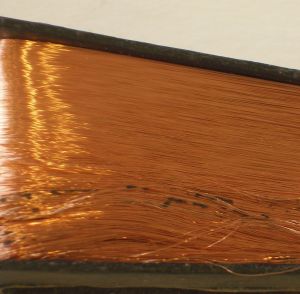
If a pickup is not potted with wax or protected with shellac, the pickup coil is more vulnerable to damage or movement of the thin copper coil wire. If the pickup gets bumped or dropped, the coil can shift and collapse making it much looser and more microphonic. This is very common and is one of the reasons why we pot just about everything we make, even if it’s only for 10 seconds. My pickups will still be as microphonic as I like to make them, but the coil will be far less likely to shift and become loose over time. Once a vintage pickup coil becomes loose it can get progressively worse very quickly.